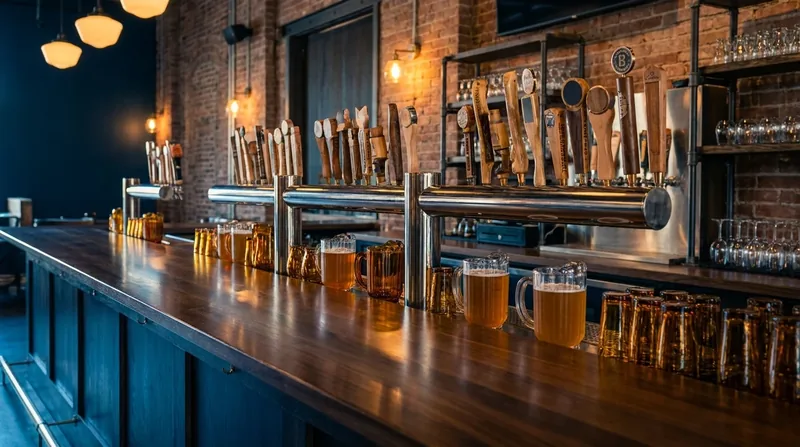
Ohio Liquor Permits: D-Class Permit Types, Costs and the Division of Liquor Control
Ohio Liquor Permits: D-Class Permit Types, Costs and the Division of Liquor Control
If you plan to sell beer, wine or spirits in Ohio, you will deal with the Ohio Division of Liquor Control. Ohio's official term is permit, so "ohio liquor permit" is the term to use on filings, while "ohio liquor license" is what most buyers search for and means the same thing in practice. This guide covers the permit classes, what the common D-class permits cost, how the application works, and which figures you still need to confirm with the state.
Disclaimer: This guide is informational content only. It is not legal or tax advice. Liquor rules come from both the state and the local government, so talk to an Ohio attorney who handles liquor matters and a CPA before you sign a lease, buy a permit or form your company.
Ohio has no general business license, but liquor is a state permit
Ohio issues no single state general business license, and counties issue no business license either. Ohio also has no statewide general contractor license. Liquor is different because a state agency decides who may sell alcohol and on what terms. The Division of Liquor Control, part of the Ohio Department of Commerce, issues the permit, but your city, village or township also has a say in whether a location can be approved.
What the Division of Liquor Control issues
The Division groups its permits by class. Three classes cover most businesses:
- Class A (manufacturing): for producers that make alcohol for sale, such as breweries, wineries and distilleries.
- Class C (carryout): for retailers that sell alcohol to be consumed off the premises.
- Class D (on-premises): for businesses that sell alcohol for drinking at the location, such as bars and restaurants.
Most people opening a bar or restaurant are looking at the D-class. It has several sub-permits, and the one most bars want is the D-5.
D-class permit types and fees
| Permit | What it allows | Fee | Key limits |
|---|---|---|---|
| D-5 | Full liquor (beer, wine and spirits) for on-premises consumption | $2,344 per year (ORC 4303.18) | Sales from 5:30 a.m. to 2:30 a.m.; limited by local population quotas |
| D-6 | Sunday sales add-on | $500 for D-class holders; $400 for C-2 holders (ORC 4303.182) | Requires local option approval |
| Other D-class permits (such as D-1, D-2 and D-3) | Varies by permit | Differs by permit; confirm on the Division's current fee schedule | Check com.ohio.gov before budgeting |
The D-5 liquor permit and why it is priced on the secondary market
The D-5 is the full-liquor on-premises permit that most new bars want. The state fee is $2,344 per year under ORC 4303.18. It allows sales from 5:30 a.m. to 2:30 a.m., and that window should shape your business plan from the start.
The bigger issue is availability. D-5 permits are limited by local population quotas, so a municipality may have no new D-5 to issue. That is why many new bars buy an existing D-5 from a current holder on the secondary market instead of applying for a new one. The purchase price is set between buyer and seller, not by the state. Before you pay anything, confirm with the Division that the permit is in good standing, that the transfer steps are clear, and that the permit can be used at your address.
New D-5 application or buying an existing permit
You have two routes, and the right one depends on the quota in your area. Ask the Division and your local authority which route is open before you choose.
- Buying an existing D-5: often the only option where quotas are full. The price is negotiated, so the real cost is the purchase price plus the permit fee. Due diligence on the permit's standing and history is essential.
- Applying for a new D-5: avoids a purchase price but depends on quota room, local option status, zoning, background checks and the absence of an objection from the city or township. Because the timeline is not verified here, you cannot plan an opening date around it until the Division gives you a current figure.
What the D-6 Sunday sales permit adds
The D-6 lets a permit holder sell on Sundays. The add-on costs $500 for D-class holders and $400 for C-2 holders under ORC 4303.182. It is not automatic. It needs local option approval, so ask the local authority whether Sunday sales are allowed at your address before you build a Sunday menu or staffing plan.
Ohio liquor license cost: what to budget
The table below separates the figures verified for this guide from the ones you need to confirm. The permit is only part of the cost of a liquor operation, so your total will be well above the permit fee.
| Cost item | Amount | Source or status |
|---|---|---|
| D-5 on-premises permit | $2,344 per year | ORC 4303.18 |
| D-6 Sunday sales add-on | $500 for D-class holders; $400 for C-2 holders | ORC 4303.182 |
| Division application fee and other class fees | Not stated in this guide | Check with the Division of Liquor Control at com.ohio.gov |
| Background checks and premises and zoning review | Not stated in this guide | Check with the Division and your local zoning office |
| Purchase of an existing D-5 | Set by the seller | No state price |
| LLC articles of organization (Form 610) | $99 | Ohio Secretary of State |
| Trade name registration or name reservation | $39 each | Ohio Secretary of State |
| Sales tax vendor's license | $50 | County auditor or Ohio Business Gateway (fee since April 9, 2025) |
Two more cost items matter. Ohio LLCs file no annual report, so there is no yearly report fee. The Commercial Activity Tax is a gross receipts tax of 0.26% (.0026) on Ohio taxable gross receipts, and only businesses with more than $6 million of Ohio taxable gross receipts owe it or must register for tax year 2025 and later. A bar above that threshold should plan for quarterly CAT returns. Workers' compensation comes from the state BWC fund, so budget that premium with BWC. Cities and villages also tax business net profit under their own rates, so check your municipality's rate.
The Ohio liquor permit application, step by step
- Form your entity. For an LLC, file Articles of Organization for a Domestic Limited Liability Company (Form 610) for $99 through Ohio Business Central. A corporation files Initial Articles of Incorporation for a Domestic For-Profit Corporation (Form 532A), also $99. Search your name first at the Ohio Secretary of State business search. Regular processing takes 3 to 7 business days.
- Choose the location and check zoning. Ask the city, village or township whether the address allows liquor sales. The Division requires a premises and zoning review, and a location that fails it leaves you holding a lease you cannot use.
- Check local restrictions. Local legislative authority and local option precinct votes can restrict permits in some areas. The city or township may also object to your application. Ask before you sign anything.
- Clear background checks. Every owner and officer goes through a background check. Gather names, addresses and history early so this step does not hold up the filing.
- File the Division application and pay the fees. Confirm the current application fee and processing timeline with the Division of Liquor Control at com.ohio.gov. This guide does not state those figures.
- Register for sales tax. Every Ohio retailer selling taxable goods or services needs a vendor's license before its first taxable sale. The county auditor or the Ohio Business Gateway issues it for $50. Register your tax accounts through the Ohio Department of Taxation.
- Set up the rest of your tax and insurance. Buy workers' compensation from the BWC fund, confirm whether CAT applies, and check your city or village net profit rate.
Timelines and what to ask the Division
This guide does not state a Division processing time because that figure is not verified here. Ask the Division for four answers before you commit: the current application fee, the current processing timeline, the transfer steps for a purchased D-5, and whether a new D-5 is available in your municipality. Those answers decide whether your opening date is realistic.
Common mistakes to avoid
- Signing a lease before confirming quota availability, local option status and zoning.
- Assuming the D-6 Sunday add-on comes with the D-5. It is a separate fee and needs local approval.
- Registering a trade name with the county. Trade names are registered with the Ohio Secretary of State, not the county.
- Making taxable sales before the vendor's license is in hand.
- Budgeting from the permit fee alone and missing the application, background, tax and insurance costs.
Where to confirm the numbers
- Division of Liquor Control, Ohio Department of Commerce: com.ohio.gov (fee schedule, application fees and timelines)
- Ohio Secretary of State: ohiosos.gov
- Ohio Department of Taxation: tax.ohio.gov
- Ohio Small Business Development Centers, free advising: Ohio SBDC Network
Bottom line
For most Ohio bars and restaurants, the D-5 is the permit to plan around. Its $2,344 annual fee is verified, but quota limits and local approvals often matter more than the fee. Budget the D-6 separately if you plan Sunday sales, confirm the Division's application fee and timeline before you commit, and get your zoning and local option answers in writing before you sign a lease.
Disclaimer: This is informational content, not legal or tax advice. Liquor permit rules change, and local rules vary, so confirm every figure with the agency and consult a qualified Ohio attorney and CPA for your situation.