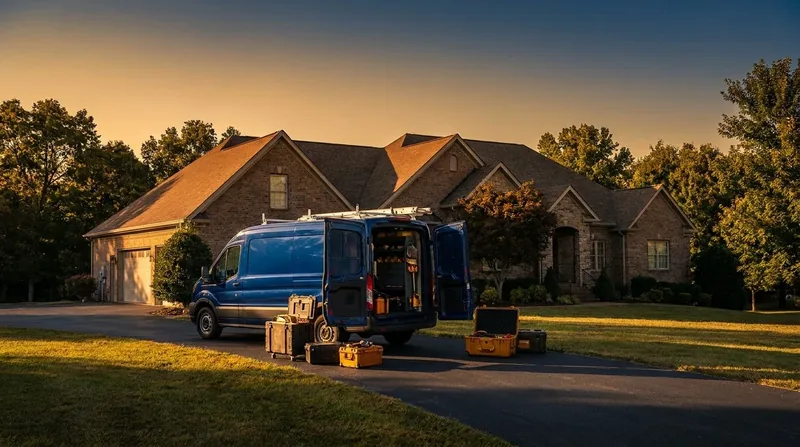
How to Start a Landscaping Business in Ohio: Pesticide Licensing and Local Rules
How to Start a Landscaping Business in Ohio: Pesticide Licensing and Local Rules
Most people searching for a landscaping license in Ohio want to know one thing: what do I legally need before the first paying job? The short answer is that Ohio has no state landscaping license and no statewide contractor license that covers landscape work. Ohio also has no general business license at the state level, and counties do not issue business licenses. What you need depends on what your crew actually does. Planting, mulching, mowing and similar work are taxable services in Ohio, so you will need a vendor's license and must collect sales tax on qualifying jobs. Applying pesticides for pay is a separate matter. It requires two licenses from the Ohio Department of Agriculture (ODA).
This guide covers landscape installation: new planting beds, sod, mulch, hardscape and other design-and-build work. If your business is mainly recurring maintenance, our lawn care guide covers that side. The steps below walk through formation, taxes, pesticide licensing, insurance and the local rules that catch many new owners off guard.
Ohio Licensing at a Glance
For a landscape installation company in Ohio, the requirements break down into five areas:
- Business formation: an LLC or corporation filed with the Ohio Secretary of State. A sole proprietor who uses a name other than their own also registers a trade name with the Secretary of State.
- Sales tax: a vendor's license, issued through the county auditor or Ohio Business Gateway.
- Pesticides: an ODA commercial applicator license and a pesticide business license, but only if you apply pesticides for pay.
- Employees: workers' compensation from the Ohio Bureau of Workers' Compensation (BWC) state fund, required once you have employees.
- Local rules: city or village permits, zoning and the municipal income tax on business net profit.
The table below lists the fees you are most likely to pay. Confirm each one on the issuing agency's site before you budget, because fees change.
| Item | Fee | Issued by |
|---|---|---|
| Articles of Organization for an LLC (Form 610) | $99 | Ohio Secretary of State |
| Name reservation (held 180 days) | $39 | Ohio Secretary of State |
| Trade name registration (Form 534A) | $39 | Ohio Secretary of State |
| Change of statutory agent or agent address | $25 | Ohio Secretary of State |
| Vendor's license | $50 per fixed place of business | County auditor or Ohio Business Gateway |
| Commercial applicator license | $35, plus $30 exam fee | Ohio Department of Agriculture |
| Pesticide business license | $35 per location | Ohio Department of Agriculture |
Ohio LLCs file no annual or biennial report, so the formation fee is a one-time cost, not a yearly charge.
What to Gather Before You File
- Two or three business name options, each checked in the Secretary of State's business search
- A statutory agent with a street address in Ohio (a post office box does not qualify)
- A written list of services, marked as installation, maintenance or pesticide application
- A startup budget that includes the fees above plus equipment, insurance and a truck
- Insurance quotes for general liability and commercial auto coverage
- A federal Employer Identification Number (EIN) from the IRS, which banks and payroll systems typically require
- Study materials for the ODA applicator exam, if you plan to apply pesticides
Step-by-Step: Starting Your Ohio Landscaping Business
- Decide which services you will sell. Write down every service and sort it into one of two groups. The first is installation: planting, sodding, mulching and hardscape. The second is pesticide application: weed control, insect and disease treatments, and any product that is a pesticide, including many “weed-and-feed” bags. The second group triggers ODA licensing. Your list also matters for sales tax, because Ohio's taxable service list includes planting, seeding, sodding, mulching, applying chemicals and fertilizing. Keep the list, because you will use it in steps 6 and 7.
- Form your entity and file the name. Many small landscapers choose an LLC because it keeps business and personal finances separate on paper. Whether it fits your situation is a question for an attorney or CPA. To file, submit Articles of Organization for a Domestic Limited Liability Company (Form 610) to the Ohio Secretary of State for $99. A corporation uses Initial Articles of Incorporation (Form 532A) with the same $99 filing fee. The LLC name must include “limited liability company” or an accepted abbreviation such as “LLC” or “L.L.C.,” and it must be distinguishable from every other registered name on the state's records. Search the name before you file, and reserve it for $39 if you need time. Regular service takes 3 to 7 business days from receipt, and filing online through Ohio Business Central is the fastest standard route. Expedite Service 1 costs $100 above the filing fee and processes within 2 business days. Expedite Service 2 costs $200 and processes within 1 business day. Expedite Service 3 costs $300 and requires in-person delivery.
- Appoint a statutory agent. Ohio calls a registered agent a statutory agent. Every LLC must appoint one and keep one in place. The agent must be an Ohio resident or a business with an Ohio address, and the listed address must be a street address. The Secretary of State will not accept articles of organization without a written appointment signed for the company and a written acceptance signed by the agent on the prescribed form. You can act as your own statutory agent if you meet the residency rule, or hire a service and compare its terms. Changes cost $25, and a resignation takes effect 30 days after it is filed, so plan ahead if you move or switch providers.
- Register a trade name if you need one. If your customer-facing name differs from your legal name, register it as a trade name. The filing is Form 534A, costs $39, and goes to the Secretary of State online or by mail. Trade names are registered with the state, not the county, so ignore any service that tells you to file with a county office. Trade names renew every five years for $25.
- Get your EIN and open a business bank account. Apply for a federal EIN directly through the IRS, which does not charge for it. Then open a separate business checking account before your first invoice. Mixed accounts make sales tax and income tax reporting harder.
- Register for a vendor's license and set up sales tax. Every Ohio retailer selling taxable services must hold a vendor's license before making taxable sales. A county vendor's license costs $50 per fixed place of business, and the county auditor issues it under a state statute (ORC 5739.17). It is not a county business license. Landscape work is taxable under ORC 5739.01 when it includes planting, seeding, sodding, removing, cutting, trimming, pruning, mulching, aerating, applying chemicals, watering or fertilizing. Ohio's state sales tax rate is 5.75%, plus county and transit authority rates that vary by location. There is one threshold to track. Providers with less than $5,000 in such sales in a calendar year fall under an exception, but once your sales reach that amount, you must register and collect. Count from your first invoice, and confirm the threshold with the Ohio Department of Taxation before you build it into your pricing. Ask the Tax Department how it treats hardscape and mixed jobs where labor and materials are billed together.
- Apply for ODA pesticide licenses if you will spray for pay. Applying pesticides for pay requires ODA licensing under Ohio Revised Code Chapter 921, and you need two separate licenses. The commercial applicator license costs $35 plus a $30 exam fee. Its license year runs October 1 to September 30 (see OAC 901:5-11-04 and ORC 921.12), so plan exams and renewals around that window rather than the calendar year. The pesticide business license costs $35 per location and requires proof of financial responsibility (see OAC 901:5-11-03 and ORC 921.09). Ask ODA what counts as a separate location before you add a second yard or shop. Two more questions belong on your ODA call list. First, which employees must hold the applicator license before they apply anything, since the answer shapes how you staff jobs? Second, which forms of financial responsibility does ODA accept? Do not assume your general liability policy qualifies. Fertilizer alone may not trigger the pesticide rules, but many lawn products combine it with a pesticide, so confirm with ODA which products count.
- Buy insurance and set up workers' compensation before your first hire. Ohio employers buy workers' compensation from the BWC state fund, not from a private carrier. Set up coverage before your first employee starts work. Many commercial clients and property managers will also ask for a certificate of general liability insurance, and some will ask about commercial auto coverage on your trucks. Price these alongside your other quotes, and take the specifics to your insurance agent.
- Check city and village rules. Local rules are where many landscapers get caught. Cities and villages tax business net profit under their own rates, so ask your city for its rate and filing schedule. Check zoning before you store equipment or trailers at home, and ask whether a home occupation rule limits customer visits or truck parking. Some cities require permits for retaining walls, driveways, patios or grading. Call 811 before any digging, since Ohio law requires utility locates first. Some municipalities also regulate fertilizer or pesticide use, which can affect your schedule and product choices. Unincorporated areas follow county rules, so confirm which jurisdiction applies to your address.
- Plan for the state business taxes. Most new landscapers will fall below the Commercial Activity Tax (CAT) threshold. For tax year 2025 and later, only businesses with more than $6 million of Ohio taxable gross receipts owe the CAT or must register. When you do owe it, the rate is 0.26% of taxable gross receipts above the $6 million exclusion, and returns are filed quarterly. Owners of pass-through businesses report business income on their personal Ohio return, where taxable business income is taxed at a flat 3%. Set aside tax money from every payment, and have a CPA review your setup before your first season.
Tips That Save Time
- Check your name before you order trucks, signs or business cards. A conflict found after printing costs far more than a search.
- Ask ODA for its current exam schedule and study materials early, because the applicator license year starts October 1.
- Keep invoices that list each service separately, so you can separate taxable service lines during a sales tax review.
- Use the Ohio Small Business Development Centers (Ohio SBDC Network) for help with your business plan and recordkeeping.
- Look up your local SBA district office at sba.gov/district/ohio for additional business contacts.
Common Mistakes to Avoid
- Searching for a state landscaping license. Ohio has none, so that time is better spent on the ODA and vendor's license steps that do apply.
- Spraying before the applicator license. Applying a pesticide for pay without the required license is the costliest mistake on this list, and a weed-and-feed bag can count.
- Filing a trade name with a county. Trade names go to the Secretary of State.
- Using a post office box as the statutory agent address. It does not qualify, and the Secretary of State will not accept articles without a qualifying address.
- Skipping the local permit check. Retaining walls, driveways and grading jobs can need permits, so confirm before you bid them.
- Forgetting sales tax in your quotes. Decide whether your quotes include tax, and show tax as a separate line on invoices.
Expected Results
A clean setup gives you a legal base to bid, sell and invoice without stopping mid-season. Regular Secretary of State filing takes 3 to 7 business days from receipt, but ODA and local processing times depend on the agency and your timing, so confirm them before you plan a launch date. Many owners find their biggest gains come from having licenses, insurance and permits in order before they bid larger jobs. Results vary with your market, pricing, crew and sales effort, and no one can promise revenue or a timeline for winning clients.
Official Ohio Resources
- Ohio Secretary of State: ohiosos.gov
- Business search and name check: businesssearch.ohiosos.gov
- Ohio Business Central (online filing): ohiobusinesscentral.gov
- Business filing forms, including trade names: Secretary of State forms page
- Ohio Department of Taxation: tax.ohio.gov
- Vendor's license information: vendor licensing page
- Ohio Department of Agriculture: pesticide applicator and business licensing (find the current pesticide pages on the agency's site)
- Ohio Bureau of Workers' Compensation: confirm coverage details directly with BWC
- Ohio SBDC Network: clients.ohiosbdc.ohio.gov
Disclaimer: This article is informational only. It is not legal or tax advice. Ohio licensing rules, tax rates and fees change, and the agencies named above are the final authority. Before you form your business, apply for a license or make a tax decision, consult a qualified attorney and a CPA who work with Ohio service businesses.
Keep exploring: related Ohio guides
- How to Start a Junk Removal Business in Ohio
- How to Start a Lawn Care Business in Ohio
- How to Start a Cleaning Business in Ohio
- How to Start a Pest Control Business in Ohio
- Ohio Contractor License
- How to Start an LLC in Ohio
- Ohio Business License
- How Much Does It Cost to Start a Business in Ohio
- All Ohio business types
- Every Ohio guide in one place