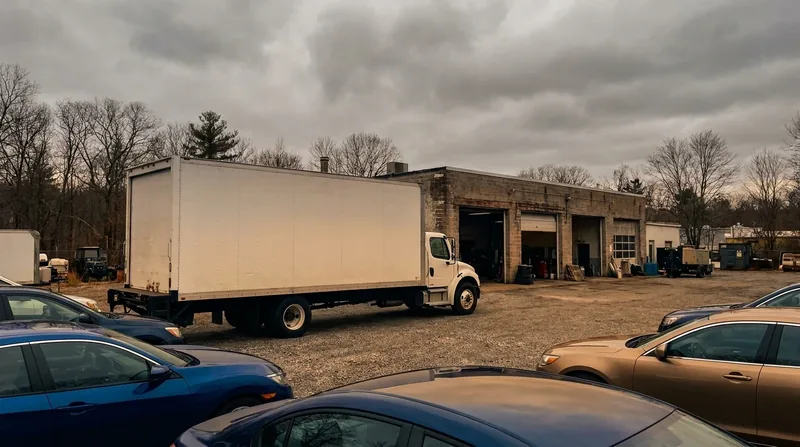
How to Start a Used Car Dealership in Ohio: Registrar of Motor Vehicles Dealer License
How to Start a Used Car Dealership in Ohio: Registrar of Motor Vehicles Dealer License
If you want to sell used cars to the public in Ohio, you need a motor vehicle dealer license from the Registrar of Motor Vehicles, which operates through the Ohio Bureau of Motor Vehicles (BMV). The rules for used car dealers sit in Ohio Revised Code Chapter 4517. This guide walks through the ohio used car dealer license process in the order most applicants find works: what to gather, what to file, what the verified fees are, and where people usually get stuck.
The BMV license is one piece of a bigger setup. You also need a legal business entity or registered trade name, a sales tax vendor's license, and a place of business that meets the statute. Ohio has no state general business license, and counties issue no business license either, so the real work is matching the right agency to each step.
Materials and Information You Need Before You Start
Gather these items before you open any application. Missing one of them is the most common reason a filing stalls.
- An available business name. Search the Ohio Secretary of State's records on Ohio Business Search. Your name must be distinguishable from every other registered entity and trade name on file.
- Articles of Organization for a Domestic Limited Liability Company (Form 610), $99, if you form an LLC. An optional name reservation costs $39 and holds the name for 180 days.
- A statutory agent appointment and acceptance. Ohio's term for a registered agent. The Secretary of State will not accept articles unless both signed forms are included.
- A trade name registration (Form 534A), $39, if you will sell under a name other than your legal name. Trade names are registered with the Secretary of State, not the county.
- A dedicated lot or building. It must be an established place of business used only for selling and displaying vehicles, and you will submit a photo of it.
- Written zoning confirmation that a used car lot is allowed at that address.
- A used motor vehicle dealer training certificate for an owner, officer, partner or director, completed within the 6 months before you apply, unless the waiver described below applies.
- Personal information for each owner, officer, partner or director. The registrar may run a background check through the Ohio Bureau of Criminal Investigation (BCI) and may charge a fee for it.
- A federal employer identification number (EIN) from the IRS, and a business bank account in the company's name.
- A sales tax vendor's license, $50 as of April 9, 2025, obtained from the county auditor or through the Ohio Business Gateway.
Step-by-Step: Getting Your Ohio Used Car Dealer License
Step 1: Choose your structure and register it with the Secretary of State
Most people starting a dealership form an LLC, though a sole proprietorship or corporation can also work. The LLC route is simple to maintain. Ohio LLCs file no annual report, and Ohio has no franchise tax and no LLC annual tax. Your main ongoing tax exposure is the Commercial Activity Tax (CAT), a gross receipts tax of 0.26% on Ohio taxable gross receipts. For tax year 2025 and later, only businesses with more than $6 million of Ohio taxable gross receipts owe the CAT or must register, and CAT returns are filed quarterly.
Your LLC name must include the words “limited liability company” or one of the abbreviations “L.L.C.,” “LLC,” “limited,” “ltd.” or “ltd.” File online through Ohio Business Central, which is the fastest standard route. Regular processing takes 3 to 7 business days from receipt. If you need speed, the expedite options are:
- Expedite Service 1: $100 above the filing fee, processed within 2 business days of receipt.
- Expedite Service 2: $200, processed within 1 business day.
- Expedite Service 3: $300, requires in-person delivery, and is processed within 4 hours if received by 1:00 p.m., otherwise by noon the following business day.
- Preclearance filing review: $50, taking 1 to 2 business days.
Expedited paper filings go to P.O. Box 1390, Columbus, OH 43216. Form 610 is the document for an LLC, and a corporation would use Initial Articles of Incorporation (Form 532A) at the same $99 filing fee.
Step 2: Appoint a statutory agent
Every Ohio LLC must appoint and continuously maintain a statutory agent. The agent must be either an Ohio resident who is a natural person, or an entity with a business address in Ohio. The address must be a street address. A post office box does not qualify, even if it has a street address attached. For a company agent, the address is its usual place of business in Ohio.
Changing the agent, the agent's address, or filing a resignation costs $25. An agent's resignation takes effect 30 days after it is filed, so line up a replacement before you resign.
Step 3: Secure a compliant lot and confirm zoning
The registrar requires an established place of business used exclusively for selling and displaying vehicles (ORC 4517.03(C)). Shared lots, home driveways and rooms in a building you also use for other work are the usual problem areas. Get written confirmation from your city or county zoning office that a used car lot is a permitted use at that address before you sign a lease or purchase agreement. Then take a clear photo of the lot showing the business sign, the display area and the vehicles, because you will submit it with the application.
Step 4: Complete the used motor vehicle dealer training course
An owner, officer, partner or director must complete a used motor vehicle dealer training course of 6 to 24 hours within the 6 months before you apply. The waiver applies if someone in the ownership group held a prior dealer license within the last two years and that license was not revoked. Keep the completion certificate, since the application requires it. Course prices vary by provider, so compare providers and confirm with the BMV which courses it accepts before you pay.
Step 5: File the used dealer application for each county where you do business
The used dealer application under ORC 4517.05 is made for each county where you do business. If you plan to sell in more than one county, you need to account for each county in your filing. The license must be renewed every two years.
On an initial license, you pay a $50 license fee plus a separate fee equal to the last assessment for the title defect recision fund (ORC 4517.10). That assessment figure is not a settled number in this guide, so ask the BMV for the current amount before you budget. The registrar may also add a BCI background check fee, so confirm that amount too. Ask the BMV directly whether the $50 license fee is charged once or per county when your application covers several counties.
You do not need a separate salesperson license. Since April 9, 2025, Ohio does not require one under ORC 4517.10, so confirm this with the BMV and check the current application for any staffing questions it asks.
Step 6: Understand the bond rules and denial grounds
ORC Chapter 4517 has no $25,000 surety bond requirement for used dealers. A $100,000 bond applies only to certain remanufactured vehicle dealers. Do not assume the absence of a bond means the registrar takes a light approach to your file. Under ORC 4517.12, the registrar can deny a license for insolvency, insufficient responsibility to pay judgments, bad repute, or a disqualifying offense. Disclose every relevant history on the application and give the BMV a clear explanation for anything that could be read as a problem. Trying to hide it is more likely to cause a denial than the history itself.
Step 7: Register for sales tax, titling and the CAT
Every Ohio retailer selling taxable goods or services needs a vendor's license before making taxable sales. The application fee is $50 as of April 9, 2025. You can obtain it through the Ohio Business Gateway or from the county auditor. The state sales tax rate is 5.75%, and county and transit authority permissive rates vary by county, so confirm the rate for your address. Ohio's sales tax vendor licensing details are on the Ohio Department of Taxation vendor licensing page.
Titling and registration of vehicles you sell runs through the county clerk of courts title office. Check with that office and with the Ohio Department of Taxation on the title and sales tax procedures for your dealership, since the handling for dealer sales can differ from a private sale. If your Ohio taxable gross receipts exceed $6 million, you must also register for and file the CAT. Confirm with the Department of Taxation whether any treatment of vehicle sales affects your calculation before you assume a number.
Step 8: Check employer and local tax obligations
If you hire employees, you buy workers' compensation coverage from the Ohio Bureau of Workers' Compensation state fund. Cities and villages tax business net profit under their own rates, so your lot's municipality may charge a local tax on top of state obligations. Ask the city or village tax office where your lot sits for its current rate and filing rules.
Costs at a Glance
The table below lists what this guide can state as settled and what you must confirm with the named agency before budgeting.
| Item | Amount | Where to confirm |
|---|---|---|
| Articles of Organization, LLC (Form 610) | $99 | Ohio Secretary of State |
| Expedite Service 1 (above filing fee) | $100 | Ohio Secretary of State |
| Expedite Service 2 / Service 3 | $200 / $300 | Ohio Secretary of State |
| Name reservation (180 days) | $39 | Ohio Secretary of State |
| Trade name registration (Form 534A) | $39 | Ohio Secretary of State |
| Change of statutory agent, or agent resignation | $25 | Ohio Secretary of State |
| Sales tax vendor's license | $50 | County auditor or Ohio Business Gateway |
| BMV dealer license fee (initial) | $50 | Registrar of Motor Vehicles (BMV) |
| Title defect recision fund fee (initial license) | Equal to the last assessment (amount to be confirmed) | Registrar of Motor Vehicles (BMV) |
| BCI background check fee | Set by the registrar (amount to be confirmed) | Registrar of Motor Vehicles (BMV) |
| Used dealer training course | Varies by provider, 6 to 24 hours | Course provider and BMV |
| Title and sales tax procedures | Confirm | County clerk of courts title office and Ohio Department of Taxation |
| Zoning for the lot | Confirm | City or county zoning office |
Common Mistakes to Avoid
- Using a post office box for the statutory agent. The address must be a street address in Ohio, so the filing can be rejected or the agent can fall out of compliance.
- Looking for a county business license. Counties issue no business license. The county auditor's role is the sales tax vendor's license.
- Filing the trade name with the county. Trade names are registered with the Secretary of State.
- Using a shared or home lot. The statute requires an establishment used exclusively for selling and displaying vehicles, and a shared space is likely to fail that test.
- Letting the training window lapse. The certificate must be completed within the 6 months before you apply, so a course finished last year will not count.
- Forgetting the county scope. The application is made for each county where you do business, so a planned second location in another county needs its own consideration.
- Budgeting from a number you have not confirmed. The title defect recision fund assessment and the BCI fee are not fixed figures in this guide.
- Assuming a $25,000 bond or a salesperson license. Neither is required for used dealers under ORC Chapter 4517 or ORC 4517.10 as described above, so confirm with the BMV before you finalize your plan.
Tips That Save Time
- Call the BMV before you sign a lease. Ask for the current application checklist, the current fee amounts, and whether the $50 license fee applies per county. Confirm these before you commit to a lot.
- Clear the name first. A reserved name holds for 180 days and costs $39, which is cheaper than refiling if a competitor files the same name while you are preparing the dealership.
- Keep a file for each owner. The training certificate, background check paperwork and identification are needed per person, and keeping them together speeds up the BMV review.
- Use expedite only when you need it. Regular Secretary of State processing of 3 to 7 business days is acceptable for most people who are not facing a lease deadline.
- Get free help if you want it. The Ohio Small Business Development Centers network offers business planning support that can help you think through the sequence before you file.
What to Expect When the Process Is Complete
Many applicants who prepare the entity, lot, zoning confirmation and training certificate before filing can expect a smoother BMV review than those who file incomplete packets. A complete, well-organized file may help the registrar process the license without repeated requests for missing documents. This outcome is not guaranteed, because the registrar decides each application on its own facts, and the BMV does not publish a processing time in this guide, so ask the BMV for its current timeline.
Once licensed, the business should be ready to sell in each county covered by your application. Set a calendar reminder for the two-year renewal, and keep your entity filings, tax registrations and training records current, since a lapse in any one of them can affect the others.
Disclaimer: This article is informational content, not legal or tax advice. Ohio statutes, agency rules and fees change, and the figures above should be confirmed with the Ohio Secretary of State, the Registrar of Motor Vehicles, the Ohio Department of Taxation, and your county clerk of courts and county auditor before you file or budget. For complex situations, including structure, dealer licensing, tax treatment of vehicle sales, lease terms and zoning, consult a qualified attorney and a certified public accountant.
Keep exploring: related Ohio guides
- How to Open a Tobacco or Vape Shop in Ohio
- How to Open a Hemp or CBD Store in Ohio After the SB 56 THC Ban
- How to Start a Sports Betting Business in Ohio
- How to Start an LLC in Ohio
- Ohio Business License
- How Much Does It Cost to Start a Business in Ohio
- All Ohio business types
- Every Ohio guide in one place