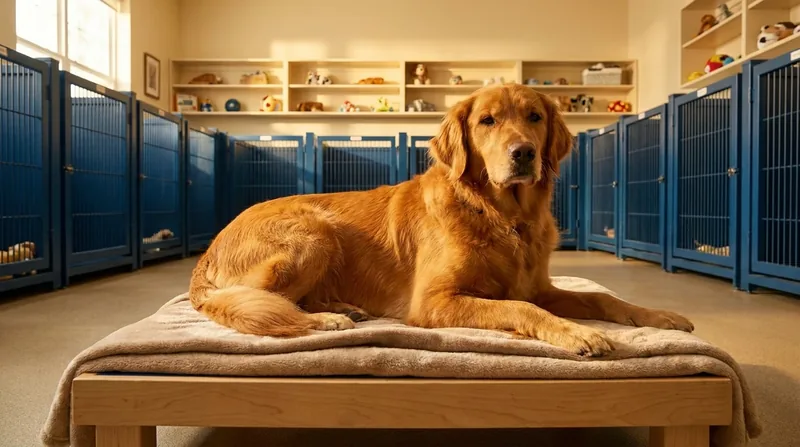
How to Start a Dog Breeding or Kennel Business in Ohio: High Volume Breeder License
How to Start a Dog Breeding or Kennel Business in Ohio: High Volume Breeder License
If you plan to breed dogs for sale in Ohio, your first job is working out which license applies. Ohio runs two separate tracks. Breeders who breed adult dogs for a fee register a kennel with their county auditor. Larger operations also need a high volume breeder (HVB) license from the Ohio Department of Agriculture (ODA). Many breeders need both. This guide covers the ohio kennel license and ohio dog breeder license process in the order you will actually do it, with the fees and deadlines confirmed in the statutes and agency rules.
Disclaimer: This article is informational content, not legal or tax advice. Ohio law and agency fees change. Confirm every figure with the agency named before you apply, and talk with a qualified attorney or CPA about your entity choice, insurance, and tax setup.
Do You Need the High Volume Breeder License?
Under ORC 956.01, a high volume breeder is an establishment with six or more breeding dogs that does any one of the following:
- Sells five or more adult dogs or puppies a year to brokers or pet stores.
- Sells 40 or more puppies a year to the public.
- Keeps more than 40 puppies under four months old bred on site.
Count carefully. The breeding dog count and the sales count both matter, and a single trigger is enough. If you have six or more breeding dogs but none of the three triggers apply, the HVB license probably does not cover you, though the county kennel registration may still. If your numbers sit near a line, ask ODA in writing before you start selling.
What You Need Before You Start
- Articles of Organization (Form 610) for an LLC, or Initial Articles of Incorporation (Form 532A) for a for-profit corporation. Filing fee: $99.
- A statutory agent (Ohio's term for a registered agent) who meets the residency or Ohio business address rules.
- A trade name registration (Form 534A) if you will sell under a name other than your legal entity name. Fee: $39.
- Liability insurance or a surety bond in the amount that matches your adult dog count.
- A working relationship with a licensed veterinarian, documented as a veterinarian-client-patient relationship.
- Photos of your facilities.
- A signed affidavit of your adult dog count.
- A signed background check release.
- The ODA license fee, based on your puppy sales or on-site puppy count.
- A federal employer identification number (EIN) if you will have an entity bank account or employees.
Step-by-Step: Starting a Licensed Ohio Breeding Kennel
Step 1: Set Your Counts and Keep a Running Log
Write down how many breeding dogs you own, how many adult dogs and puppies you sell to brokers or pet stores each year, how many puppies you sell to the public, and how many puppies under four months you keep on site. Start the log before your first sale. ODA will want to see numbers that match your records, and a clean log makes the affidavit fast to complete.
Step 2: Choose Your Entity and File With the Secretary of State
Most breeders choose a limited liability company because it separates business debts from personal assets, though the right structure depends on your situation. Talk with a qualified attorney or CPA before you decide. File online through Ohio Business Central at ohiobusinesscentral.gov. Regular processing takes 3 to 7 business days from receipt, and online filing is the fastest standard route.
Your LLC name must include the words “limited liability company” or one of the abbreviations “L.L.C.,” “LLC,” “limited,” “ltd.,” or “ltd.” It must also be distinguishable on the Secretary of State's records from other registered names. You can reserve a name for 180 days for $39. Ohio LLCs file no annual or biennial report, so there is no recurring report fee. Check name availability at businesssearch.ohiosos.gov before you file.
If you need speed, expedited options are available. Expedite Service 1 costs $100 above the filing fee and is processed within 2 business days of receipt. Expedite Service 2 costs $200 and is processed within 1 business day. Expedite Service 3 costs $300, requires in-person delivery, and is processed within 4 hours if received by 1:00 p.m. A preclearance review costs $50 and takes 1 to 2 business days.
Step 3: Appoint a Statutory Agent
Every Ohio LLC must appoint and keep a statutory agent. The agent must be either an Ohio resident who is a natural person, or a business entity with an Ohio business address. The address must be a street address. A post office box does not qualify, even if it has a street address attached. The Secretary of State will not accept your articles unless they are accompanied by the written appointment and the agent's signed acceptance on the prescribed form. Changing an agent or an agent's address costs $25.
Step 4: Register a Trade Name if You Need One
If you will operate as “Your Kennel Name” rather than your legal entity name, register a trade name or fictitious name with the Ohio Secretary of State, not the county. The fee is $39. Renewal costs $25 every five years, and a change in the registrant's name costs $25. File through Ohio Business Central or by mail, using the forms listed at ohiosos.gov.
Step 5: Buy Insurance or a Surety Bond at the Right Level
The HVB license requires liability insurance or a surety bond under ORC 956.03(A)(6). The required amount depends on your adult dog count:
| Adult dogs on site | Required coverage |
|---|---|
| Up to 25 | $5,000 |
| 26 to 50 | $10,000 |
| Above 50 | $50,000 |
Get a quote for the correct tier before you apply, and keep the certificate or bond document ready for the packet. If your adult dog count grows into a higher tier, the coverage has to grow with it.
Step 6: Establish Your Veterinarian Relationship
The application requires a veterinarian-client-patient relationship. In practice, this means a licensed veterinarian who examines your dogs, keeps their health records, and is available to treat them. Choose the vet before you apply, schedule initial exams, and keep the records. Ask the vet's office what documentation they provide, because the application will ask you to show it.
Step 7: Assemble the Application Packet
Your packet includes the affidavit of your adult dog count, photos of each facility where dogs are housed, a background check release, your veterinarian relationship documentation, and proof of insurance or bond. Take clear, dated photos of each housing area, the sanitation and water setup, and the exercise space. Do not wait until the last week to gather these items, because a missing page can push your timeline.
Step 8: Register Your Kennel With the County Auditor
A kennel that breeds adult dogs for a fee must register with the county auditor under ORC chapter 955. The fee is set by the county, so check with your county auditor for the current amount and the forms they require. Separately, every dog over three months old needs a county dog license. Confirm the license cost and renewal rules with your county as well.
Step 9: Apply to ODA at Least 90 Days Before You Start
The HVB license is an annual ODA license under ORC 956.04. You must apply at least 90 days before you start operating as a high volume breeder, so plan backward from your intended first sale. Under ORC 956.07, as of September 30, 2025, the annual license fee depends on your sales volume:
| Trigger | Annual fee |
|---|---|
| 40 to 60 puppies sold to the public | $150 |
| 61 to 150 puppies sold to the public | $250 |
| 151 to 250 puppies sold to the public | $350 |
| 251 to 350 puppies sold to the public | $500 |
| 351 or more puppies sold to the public | $750 |
| Sales to brokers or pet stores, or more than 40 puppies under four months kept on site | $150 |
Confirm the current fee schedule with ODA before you pay, since these amounts are stated as of September 30, 2025.
Step 10: Handle Your Tax and Employer Registrations
Ohio has no state general business license, and counties issue no business license. Your tax and employer obligations depend on what you sell and how you operate:
- Sales tax vendor's license: If you make taxable retail sales, you need a vendor's license before your first taxable sale. The county auditor issues it under a state statute, with a $50 application fee as of April 9, 2025. You can apply through the Ohio Business Gateway or the county auditor. See the Department of Taxation's vendor licensing page.
- Commercial Activity Tax (CAT): Ohio has no corporate income tax or LLC annual tax, but the CAT is a gross receipts tax of 0.26%. For 2025 and later, only businesses with more than $6 million of Ohio taxable gross receipts owe it or must register. Most small kennels will fall below that line, but confirm your figures with a CPA.
- Workers' compensation: If you hire employees, you buy coverage from the state fund administered by the Bureau of Workers' Compensation (BWC).
- City or village net profit tax: Many Ohio cities and villages tax business net profit at their own rates. Check the rate where your business is located.
For state tax questions, the Ohio Department of Taxation is at tax.ohio.gov.
Step 11: Calendar the December Renewal
HVB licenses renew in December for the following year. Put the renewal date on your calendar in the autumn, update your adult dog count and sales figures, and confirm your insurance or bond still matches your current count. A lapse in the license can stop your sales, so treat the renewal as a fixed deadline.
Common Mistakes to Avoid
- Counting only the dogs you sell. The breeding dog count drives the HVB threshold, not just the puppies you move out the door.
- Selling before the license is issued. The 90-day rule is a minimum lead time, so file early and treat the start date as the license date, not your filing date.
- Using a post office box for your statutory agent. The Secretary of State requires a street address, so a PO box will get your articles rejected.
- Assuming the county issues a business license. Ohio counties issue no business license. The county auditor's role is the vendor's license and the kennel registration.
- Using the wrong insurance tier. A bond sized for 25 dogs will not cover you once you add the 26th.
- Forgetting the annual renewal. Missing the December renewal can interrupt sales for the whole year.
- Assuming an LLC files an annual report. Ohio LLCs file no annual or biennial report, so do not budget for one, but do keep your ODA and county renewals on schedule.
- Skipping the local tax check. City and village net profit taxes are separate from state obligations.
What to Expect After You Apply
A complete packet submitted at least 90 days before your intended start date is designed to protect your timeline. It is less likely to trigger requests for missing documents, but results vary with each applicant and each inspection. This guide does not state how long ODA takes to review an application, so ask the agency for its current processing time when you submit. Plan to keep operating only under a valid license, and keep copies of every approval, receipt, and certificate in one file.
Cost Summary
| Item | Amount | Source |
|---|---|---|
| Articles of Organization (LLC, Form 610) | $99 | Secretary of State |
| Name reservation (180 days) | $39 | Secretary of State |
| Trade name registration (Form 534A) | $39 | Secretary of State |
| Statutory agent change or resignation | $25 | Secretary of State |
| Sales tax vendor's license application | $50 | County auditor or Ohio Business Gateway |
| ODA HVB license | $150 to $750, based on sales volume | Ohio Department of Agriculture |
| Insurance or surety bond | $5,000 to $50,000 in coverage, based on adult dog count | Your insurer or surety |
| County kennel registration | Set by county, confirm with your auditor | County auditor |
| County dog license (dogs over three months) | Set by county, confirm locally | Your county |
The ODA fee and the insurance amount are the largest costs for most high volume breeders. The county fees and local taxes depend on where you are located, so get those numbers directly from the agencies before you budget.
Next Steps
Start with your dog count and sales log, choose your entity, and set your application date at least 90 days out. Then work through the county registration and ODA packet in parallel. For Secretary of State filings, visit ohiosos.gov. For free small business guidance, the Ohio Small Business Development Centers can help you organize your plan. For anything involving your entity structure, insurance, or taxes, consult a qualified attorney or CPA. This article is informational content, not legal or tax advice.
Keep exploring: related Ohio guides
- How to Start a Christmas Tree Farm in Ohio
- How to Start a Farm Market or CSA in Ohio
- How to Start a Tree Service Business in Ohio
- How to Start a Maple Syrup Business in Ohio
- How to Start an LLC in Ohio
- Ohio Business License
- How Much Does It Cost to Start a Business in Ohio
- All Ohio business types
- Every Ohio guide in one place