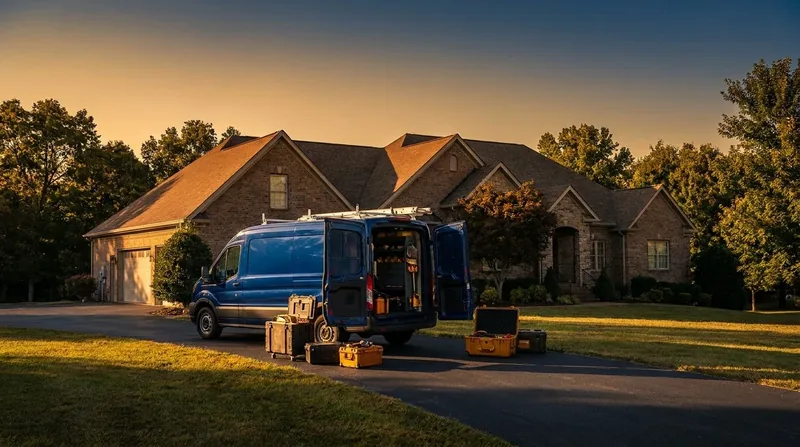
How to Start a Snow Removal Business in Ohio
How to Start a Snow Removal Business in Ohio
Snow removal is one of the few service businesses where one winter can make or break your year, and Ohio winters are unpredictable. Some seasons bring steady storms and frequent callouts. Others barely deliver a dusting. A successful ohio snow removal business is built for that uncertainty: clear written contracts, solid liability coverage, and a setup that doesn't drain your cash when the forecast stays dry.
This guide walks through the steps as they apply in Ohio, from choosing a structure and filing with the Secretary of State to the tax registrations and insurance that matter most for plowing and salting. Ohio does not issue a state snow removal license, so most of your paperwork looks like what any small service company files. The real differences are in your contracts and insurance, which is where most snow removal operators get hurt.
This article is informational content, not legal or tax advice. Ohio rules change, and the details of your situation matter. Talk with an Ohio business attorney and a CPA before you sign contracts or choose a business structure.
Materials and Tools You Will Need
Make a list of what the business needs to operate before you file anything. Your startup list will grow as you learn, but these are the core items:
- A work truck with a plow mount rated for the blade you buy
- A snowplow blade, such as a V-plow for lots and a straight blade for drives
- A salt spreader, plus bagged or bulk deicing material and a dry storage spot for it
- Shovels, push blades, and a snow blower for walkways, steps, and tight spots
- A dispatch method, such as a phone app or radio, and a time-stamped work log for each callout
- Written service agreement templates
- Commercial auto insurance and commercial general liability insurance
- An Ohio Business Central account for state filings
- A separate business bank account and bookkeeping software
Equipment prices vary widely by make, age, and blade size, so get quotes from local dealers rather than relying on a national average. Used equipment is common in this trade, but have a mechanic inspect plows, hydraulic lines, and spreaders before the first storm.
Step-by-Step: Starting Your Ohio Snow Removal Business
Step 1: Choose your business structure
Most solo operators start as a sole proprietorship or a limited liability company (LLC). A sole proprietorship requires no formation filing with the state, but you personally carry the liability. A snow removal business faces slip-and-fall claims, property damage from plow strikes, and vehicle accidents, so the separation an LLC provides matters more in this trade than in many others. A corporation is also an option. The Ohio Secretary of State lists the filing fee for initial articles of incorporation at $99, the same as an LLC, but LLCs are the more common choice for small plow operators. Ask a CPA how the structure affects your taxes.
Step 2: Pick a name and check it
Search the Secretary of State's database at businesssearch.ohiosos.gov before you commit to a name such as Buckeye Snow Removal LLC. An LLC name must contain the words limited liability company or an accepted abbreviation: L.L.C., LLC, limited, ltd., or ltd. The name must be distinguishable on the state's records from any other LLC, corporation, limited liability partnership, limited partnership, or registered trade name, unless the prior holder consents in writing. If you need time before filing, you can reserve the name for 180 days for $39.
Step 3: File Articles of Organization
Form 610, the Articles of Organization for a Domestic Limited Liability Company, creates your LLC. The filing fee is $99. File through Ohio Business Central at ohiobusinesscentral.gov, which is the fastest standard route. Regular service takes 3 to 7 business days from receipt. Expedited options cost more:
- Expedite Service 1 costs $100 above the filing fee and is processed within 2 business days of receipt.
- Expedite Service 2 costs $200 and is processed within 1 business day.
- Expedite Service 3 costs $300, requires in-person delivery, and is processed within 4 hours if received by 1:00 p.m., otherwise by noon the following business day.
- A preclearance filing review costs $50 and takes 1 to 2 business days.
Ohio calls your registered agent a statutory agent. Every LLC must appoint one and keep one in place. The agent must be an Ohio resident or an entity with an Ohio business address, and the address must be a street address, not a post office box. The Secretary of State will not accept your articles without a signed written appointment and the agent's signed acceptance. If you later change the agent, change the agent's address, or file a resignation, expect a $25 fee. A resignation takes effect 30 days after it is filed. Ohio LLCs file no annual or biennial report, so there is no recurring state report to calendar.
Step 4: Get a federal EIN
Apply for an employer identification number (EIN) directly through the IRS website. You will need it to open a business bank account, run payroll, and fill out vendor forms for commercial property managers. Do not pay a third-party site to file it for you.
Step 5: Register a trade name if you operate under a different name
If you plan to do business under a name other than your LLC's exact legal name, such as a nickname or a second brand, you need a trade name registration. Form 534A costs $39 to register and is filed with the Ohio Secretary of State, either online through Ohio Business Central or by mail. Trade names are registered with the state, not the county. Renewal costs $25 every five years, and an update or change of registrant name costs $25.
Step 6: Sort out your tax registrations
Ohio taxes are where many new operators make expensive assumptions, so take this step slowly.
- Sales tax. Snow and ice removal is not among the taxable services listed in ORC 5739.01(B)(3), so a plain plowing or salting contract is generally not subject to sales tax. Bundled taxable services, such as exterior building cleaning or lawn care, are taxed. If a single contract mixes plowing with those services, ask the Ohio Department of Taxation how that contract should be treated before you sign it.
- Vendor's license. An Ohio vendor's license is needed only if you sell taxable items or services. The application fee is $50 under ORC 5739.17. If you resell bagged ice melt or rock salt to customers as a product, that sale is generally taxable, so you would need the license. It is obtained through the Ohio Business Gateway or the county auditor. Counties do not issue general business licenses, so the county auditor's role here is limited to the vendor's license.
- Commercial Activity Tax (CAT). The CAT is a gross receipts tax of 0.26% on Ohio taxable gross receipts. For tax year 2025 and later, only businesses with more than $6 million of Ohio taxable gross receipts owe the CAT or must register. Most small plow operators will fall well under that threshold, but confirm your position with the Department of Taxation.
- State income tax. The Department of Taxation states that taxable business income is taxed at a flat 3%. How this applies to your LLC's profit depends on how it is taxed, so confirm with your CPA.
- Municipal net profit tax. Many Ohio cities and villages tax business net profit under their own rates. Check the rate in your city and in any municipality where you perform work.
Ohio has no general state business license. Your city may still regulate parking, plowing on public streets, or sidewalk responsibilities, so check your municipal code before you plow for public or commercial clients.
Step 7: Get insurance before your first contract
Insurance is the central risk in this business, and it drives everything else in your setup. Slip-and-fall claims on icy surfaces are the most common source of trouble, and many commercial clients will ask for proof of coverage before they hire you.
- Commercial general liability. This covers injuries and property damage at client sites caused by your work. Ask each carrier how it treats slip-and-fall claims and whether it includes completed operations coverage.
- Commercial auto. Personal auto policies often exclude using a vehicle for paid work, and a plow truck used for hire is a commercial exposure. Confirm your policy covers the truck, the plow, and any employees who drive it.
- Workers' compensation. Ohio is a monopolistic state fund, so you buy workers' compensation coverage from the Ohio Bureau of Workers' Compensation (BWC), not from a private insurer. Coverage is required once you have employees. Ask BWC how your subcontractors and any part-time helpers are classified before you hire them.
Get quotes from at least three insurance agents who write contractor and snow removal policies. Ask specifically about additional insured endorsements, because commercial property managers usually require their company to be listed on your policy.
Step 8: Write contracts that define the work
A written contract is your best protection against disputes over what you agreed to plow, when, and how much. Verbal agreements leave too much room for argument after a bad storm. Your contract template should define at least these terms:
- Trigger depth. The snowfall amount, in inches, that starts a service call, along with how and where it is measured. Do not leave this to judgment.
- Service windows. The hours you commit to, what happens if a storm continues past the window, and how you handle overnight accumulation.
- Scope of work. Exactly which areas you clear, such as lots, drives, walks, and steps, and which you exclude, such as roofs, ice dams, and snow piles dumped in other spots.
- Salting and extra passes. Whether salting is included, what triggers a second pass, and how extra work is billed.
- Pricing and billing. Whether the contract is per push, seasonal, or a combination, when invoices go out, and the payment terms.
- Property damage and pre-existing conditions. Who is responsible for damage to curbs, sprinkler heads, light posts, and mailboxes, and how you document the site before the season starts.
- Hold harmless and indemnity. Language stating how responsibility is shared when claims arise. Have an attorney draft or review this clause, because its enforceability depends on how it is written and on Ohio law.
- Additional insured. Confirm that the client is named on your general liability policy as the contract requires, and send a certificate when they ask for one.
- Cancellation. What happens if the client cancels mid-season and how unused seasonal fees are handled.
Step 9: Set up your operations
Operations are where small snow businesses either look professional or fall apart in the first big storm. Photograph each property before the season starts and date the photos. Keep a time-stamped log for every callout that records arrival time, departure time, snow depth, and materials used. That log is your evidence if a client disputes a bill or a claim comes in. Store salt on a dry, covered surface, because wet or clumped salt wastes money and performs poorly. Set up a dispatch routine so one person can call out crews, and write down who is responsible for the decision to plow.
Step 10: Price your work and find your first clients
Seasonal contracts give you more predictable revenue, but they also commit you to every storm in the season. Per-push pricing protects you in a light winter but makes monthly cash flow harder to forecast. Many operators offer both and build a blended price. Price each property from its size, the labor it needs, the equipment it takes, and your insurance cost, and check your numbers against local competitors before you publish a rate.
Early clients usually come from property managers, homeowners associations, apartment complexes, churches, small office parks, and local businesses. Build a simple list of these prospects in the fall, visit them in person, and bring your insurance certificate and a sample contract. Create a Google Business Profile so customers can find you during the first heavy storm.
Expected Results
Results vary widely from one operator to the next, and no article can promise a specific income. A first season is often modest while you build a client list and learn how long each property takes. Operators who sign seasonal contracts early may see more predictable revenue, but no contract guarantees a particular number of storms. A mild winter can reduce per-push revenue sharply, so build your startup budget around a light season, not a heavy one. Treat your first year as a test of your pricing, equipment, and service process.
Common Mistakes to Avoid
- Starting work before your general liability and commercial auto policies are in force.
- Relying on verbal agreements or a one-page invoice in place of a full written contract.
- Leaving the trigger depth and service window undefined, which leads to disputes after every storm.
- Using a personal auto policy for plowing you are paid to do.
- Assuming a county license covers you. Counties issue no general business license.
- Letting your statutory agent lapse or using a post office box as the agent's address.
- Bundling plowing with taxable services such as exterior cleaning without asking the Department of Taxation how the contract is treated.
- Hiring helpers before you have workers' compensation coverage through BWC.
- Skipping before-and-after photos, which leaves you without evidence when a client claims damage.
- Underbudgeting startup costs, including equipment, salt storage, insurance deposits, and the state filing fees.
Next Steps and Official Resources
Confirm current fees, processing times, and tax treatment on the official pages before you file, because agency rules and rates change. Start with these resources:
- Ohio Secretary of State: https://www.ohiosos.gov/
- Business name search: https://businesssearch.ohiosos.gov/
- Ohio Business Central filing portal: https://www.ohiobusinesscentral.gov/
- Business filing forms: https://www.ohiosos.gov/business/business-filing-forms/
- Ohio Department of Taxation: https://tax.ohio.gov/
- Vendor's license information: https://tax.ohio.gov/business/ohio-business-taxes/sales-and-use/vendor-licensing
- Ohio Small Business Development Centers: https://clients.ohiosbdc.ohio.gov/
- SBA resources for Ohio: https://www.sba.gov/district/ohio
Before you sign your first commercial contract or choose between an LLC and another structure, talk with a qualified Ohio business attorney and a CPA. The contract terms and insurance limits you choose will decide whether one bad storm is a setback or a disaster, and that is worth a professional review.
Keep exploring: related Ohio guides
- How to Start a Pressure Washing Business in Ohio
- How to Start a Cleaning Business in Ohio
- How to Start a Pest Control Business in Ohio
- How to Start a Junk Removal Business in Ohio
- Ohio Contractor License
- How to Start an LLC in Ohio
- Ohio Business License
- How Much Does It Cost to Start a Business in Ohio
- All Ohio business types
- Every Ohio guide in one place